
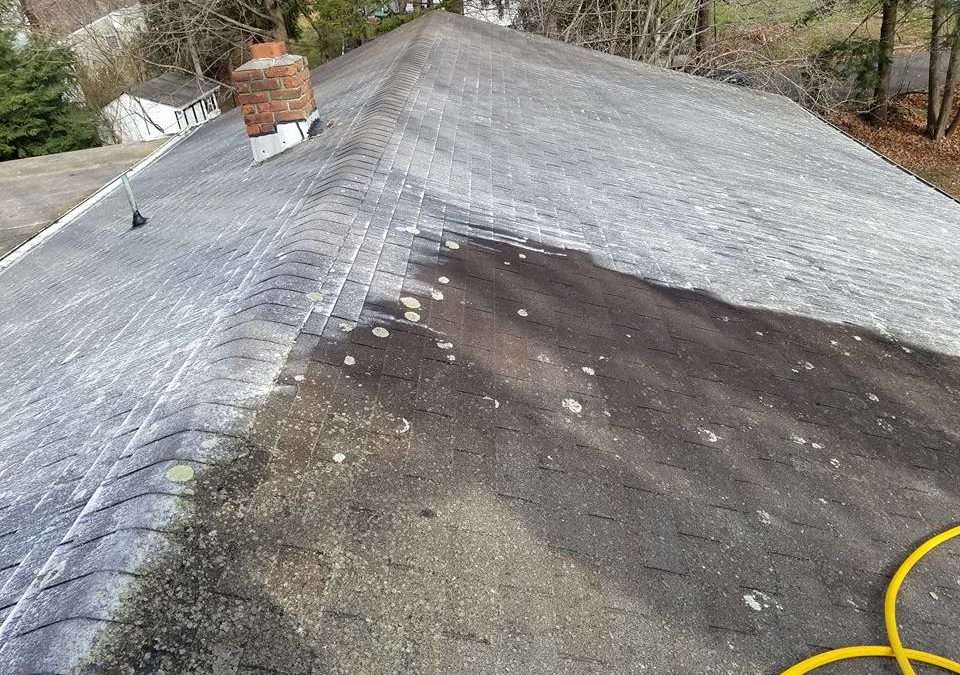
If you are seeing black streaks on your roof in NJ, there is a good chance you are looking at roof algae, not just dirt or a random cosmetic issue. Those dark streaks and black stains are common on asphalt shingles, especially in humid climates like New Jersey, where shade, moisture, and organic debris tend to stick around.
Many homeowners assume the problem is only about the roof’s appearance. It does affect your home’s curb appeal, but it can also signal larger exterior maintenance needs. When algae growth starts appearing on roof shingles, the same damp conditions often encourage buildup on siding, gutters, soffits, and other exterior surfaces as well.
That is why this kind of staining is worth addressing properly, not ignoring until it gets worse, or jumping straight to roof replacement when the roof may only need professional cleaning.
What Causes Black Streaks on Roof Shingles?
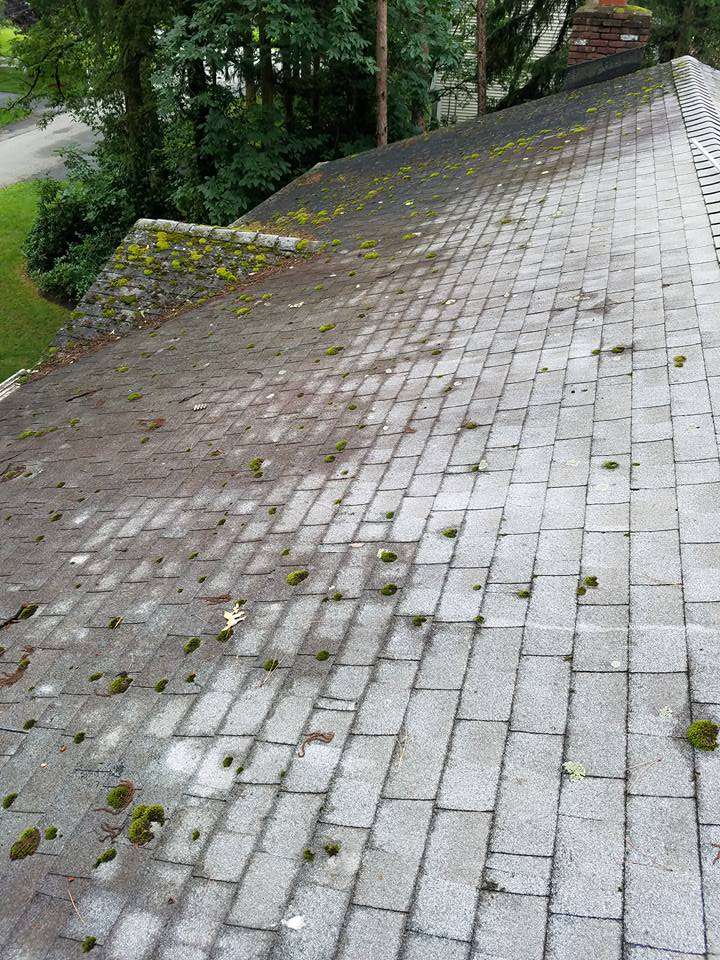
In many cases, the main suspect behind those unsightly black streaks is a type of algae called Gloeocapsa magma. This resilient organism spreads through algae spores and tends to thrive in humid environments, especially on asphalt shingle roofs.
Modern shingles often contain a limestone filler, which can provide algae with a comfortable surface to grow on. Once spores land and conditions remain damp enough, you start seeing algae staining, dark stains, and uneven streaking across your roof. The roof edge, shaded areas, and sections under tree cover are usually the first places where the streaks become noticeable.
The good news is that these streaks do not always mean the roof is failing. In many cases, they are more of a buildup issue than a structural emergency. But that does not mean homeowners should ignore them.
Why roof algae is more than a cosmetic issue
Plenty of homeowners call black streaks “just a cosmetic issue,” but they still matter. Even when the staining has not caused major roof damage, it can drag down the home’s appearance, make the house look older than it is, and hurt the curb appeal of your home.
That matters even more if you care about property value or plan to sell. Potential buyers notice roof stains fast. A streaked roof can make the whole property look like it has been neglected, even if the rest of the home is in great shape.
On top of that, roof algae usually does not stay isolated. The same damp, shaded, debris-heavy conditions that support algae growth on shingles can also support mildew and organic growths on siding, trim, and gutters.
So when you see black streaks on the roof, it is smart to inspect the rest of the exterior too.
Why Black Streaks Are Common in New Jersey
Unsightly black streaks are a common problem in New Jersey because so many homes deal with:
- high humidity
- tree shade
- damp environmental conditions
- trapped leaf debris
- poor air circulation
- runoff patterns that keep sections of the roof wet
Homes surrounded by mature trees are at higher risk, especially if the roof does not get strong sunlight all day. Even with good ventilation, the roof surface can remain damp long enough for algae spores and other organic materials to spread.
What not to do: avoid aggressive pressure washing
One of the biggest mistakes so many homeowners make, is trying to blast away roof algae with pressure washing or consumer pressure washers.
That is usually not the best way to handle asphalt shingle roofs.
Why? High pressure can actually strip away the protective granules on shingles, shortening the life of the roofing materials. It can also force water where it should not go. Even a garden hose and scrub-heavy DIY method can create uneven results or leave the growth behind.
For most shingle roofs, the right approach is a soft-wash roof treatment using low pressure and the right cleaning solution. A professional soft washing process is designed to treat the algae instead of just rinsing off the visible stain.
Why Soft Washing is Usually the Effective Solution
A professional roof cleaning treatment typically uses a soft-wash method rather than harsh blasting. That means low pressure, controlled application, and a solution designed to safely break down algae staining and organic buildup.
In many cases, pros use a treatment containing sodium hypochlorite at the correct dilution, applied with specialized equipment rather than random DIY mixing in a pump sprayer. The goal is not just to improve your roof’s appearance for a week. The goal is to kill the algae growth more completely so the roof actually gets cleaner and stays cleaner longer.
That is why professional roof cleaning is often the best course of action for homeowners dealing with unsightly streaks or recurring algae staining. It is far more effective than scrubbing the roof yourself, and much safer for the shingles than aggressive power washing.
What else to check when the roof has black stains
If black streaks are visible on the roof, look around the rest of the home for related signs of buildup. You may also notice:
- green film on siding
- dark staining near gutters
- mildew around soffits and fascia
- runoff marks below roof lines
- slippery buildup on steps or walks
- organic materials collecting in valleys and roof edges
This is why roof cleaning often pairs naturally with whole house washing.
If the roof has visible algae, the siding and trim need attention, too. Cleaning one part of the home while ignoring the rest can leave the exterior looking uneven.
Does a stained roof mean you need roof replacement?
Not always. This is one of the biggest misconceptions homeowners have.
A roof covered in black stains may still be structurally fine. Sometimes the real issue is algae staining, not immediate failure. Of course, if shingles are curling, cracking, losing granules heavily, or nearing the end of their life, that is a different conversation. But black streaks alone do not automatically mean you need a full roof replacement.
In many cases, professional roof cleaning is the more reasonable and cost-effective first step. It improves the roof’s appearance, helps restore an attractive roof, and gives you a clearer view of whether there are actual wear issues underneath the staining.
Preventive Measures That Can Help Slow Future Growth
No cleaning method is a totally permanent solution, especially in moist, shaded areas, but some preventive measures can help reduce future growth:
- trim back overhanging branches
- improve sunlight exposure where possible
- reduce trapped leaves and organic materials
- keep house gutters flowing properly
- schedule regular roof maintenance
- ask about algae-resistant options when replacing old shingles
Some homeowners also look into algae-resistant shingles, copper granules, or other algae-resistant materials when the roof is eventually replaced. Those options can help with long-term protection, though they do not change the fact that New Jersey’s moisture-heavy climate still creates favorable conditions for algae over time.
Why this matters for curb appeal
Whether you are staying put or thinking about listing the house later, a clean exterior changes how the whole property reads from the street. A roof covered in black staining can make a home look older, dirtier, and less cared for. A cleaner roof, cleaner siding, and better-maintained exterior all support a stronger home’s appearance, stronger property value, and better first impressions.
That is especially true in neighborhoods like Franklin Lakes, Saddle River, Ridgewood, and Ramsey, where exterior presentation matters and buildup tends to show faster on shaded properties.
Contact Hydro Eco Clean
If you are dealing with black streaks on your roof in NJ, do not assume you need a new roof right away, and do not let a pressure washer go to town on your shingles. The safer move is to address the algae growth with the appropriate low-pressure treatment and check whether the rest of the exterior needs cleaning as well.
Hydro Eco Clean provides professional roof cleaning and house washing for homeowners across North Jersey. If your roof shingles show algae staining, dark streaks, or other signs of organic buildup, now is a good time to have it looked at properly.
Request a free estimate and get a clearer idea of what your roof and exterior actually need.